#LSPAA Awards
Take a look at the winners from the 2026 Lincolnshire Sport & Physical Activity Awards
Sport & Physical Activity Awards
The Active Lincolnshire Sport & Physical Activity Awards, provide an opportunity to recognise the outstanding individuals and organisations who work so hard to inspire and enable our county to be active. From dedicated coaches, to tireless volunteers, and exceptional sporting talent, the awards shine a light on the amazing achievements of individuals and organisations across the county.
View page >
Jobs
Find current job opportunities with Active Lincolnshire
View page >
Lincolnshire Sport & Physical Activity Network
The Lincolnshire Sport & Physical Activity Network (LSPAN) is your opportunity to come together and connect with other people who are involved with delivering sport or physical activity in Lincolnshire - whether that is as part of a sports club, community group, organisation or as an individual coach or instructor. If you work or volunteer in sport or physical activity across Lincolnshire, join the group for free to get support and guidance and connect with others with a shared passion and purpose. We'll provide useful information to help strengthen your work and share what's working well across the county.
View page >
Safeguarding and Welfare Support
View page >
This report presents a summary of the learning, reflections and insights gathered during phase one of our place work in South Holland.
This report reviews the development-phase learning and insight of our place work in South Holland and explains how community evidence will guide full-award priorities and ongoing evaluation.
The report brings together community voices, local research and partner insights to explore the barriers people face to being active, from transport and cost to confidence and awareness of opportunities.
This learning is shaping our priorities for rural communities, children and young people, and agri-food shift workers in the district. It sets out how community feedback and ongoing evaluation will guide the next phase, with the aim of increasing activity and reducing inequalities.
Read the full report here, or take a look at our summary below.
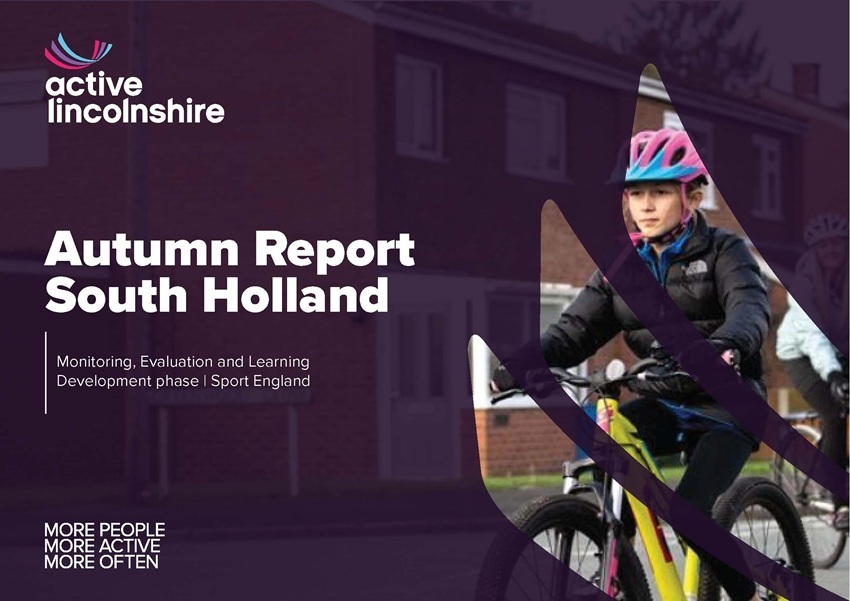
Our learning in South Holland brings together participation data, residents’ experiences and partner perspectives to build a fuller picture of what helps or prevents people from being active. Through our Community Connector’s work, we have built trust in isolated rural communities and heard about the everyday challenges people face, including transport, cost, confidence and knowing what opportunities are available. A rurality study involving over 550 participants and more than 1,300 responses to Pride in Place have added breadth to this understanding.
This engagement has highlighted that rural communities have different experiences and needs, with some facing particularly acute isolation and difficulties accessing opportunities. It has also shown that gathering insight is only part of the picture: we need clearer ways to bring findings together, reflect on what they mean and turn learning into action. These lessons are shaping our priorities for the next phase, with community feedback and lived experience continuing to inform decisions.